
Introduction
Ever written a poem or a book, composed a song, designed a logo, or filmed a video? Then you’ve created something worth protecting. Copyright protection in Nigeria is the legal shield that guards your creative work from being copied, stolen, or misused. But here’s the thing—many Nigerians don’t know how it works or even that it exists.
So, let’s break it down. This article will walk you through copyright protection in Nigeria, what it covers, how to secure it, and what to do if someone infringes on your rights. No legal jargon—just plain English.
Contents
Legal Framework for Copyright Protection in Nigeria
What Works Are Protected by Copyright?
Who Owns Copyright in Nigeria?
How to Secure Copyright Protection in Nigeria
Duration of Copyright Protection
Remedies for Copyright Infringement
Defences to Copyright Infringement
Copyright Protection for Online Content
Importance of Licensing and Assignment
Irrevocable Copyright Agreements in Nigeria
Role of Lawyers and Legal Advice
Legal Framework for Copyright Protection in Nigeria
The backbone of copyright law in Nigeria is the Copyright Act 2022, which replaced the older 1988 Act. This law spells out what’s protected, who owns it, and what happens when someone crosses the line.
The Nigerian Copyright Commission (NCC) is the body responsible for overseeing copyright matters. They handle registrations, enforcement, and public awareness. Nigeria is also a signatory to international treaties like the Berne Convention, which means your work can be protected in other countries too though it is registered in Nigeria.
What Works Are Protected by Copyright?
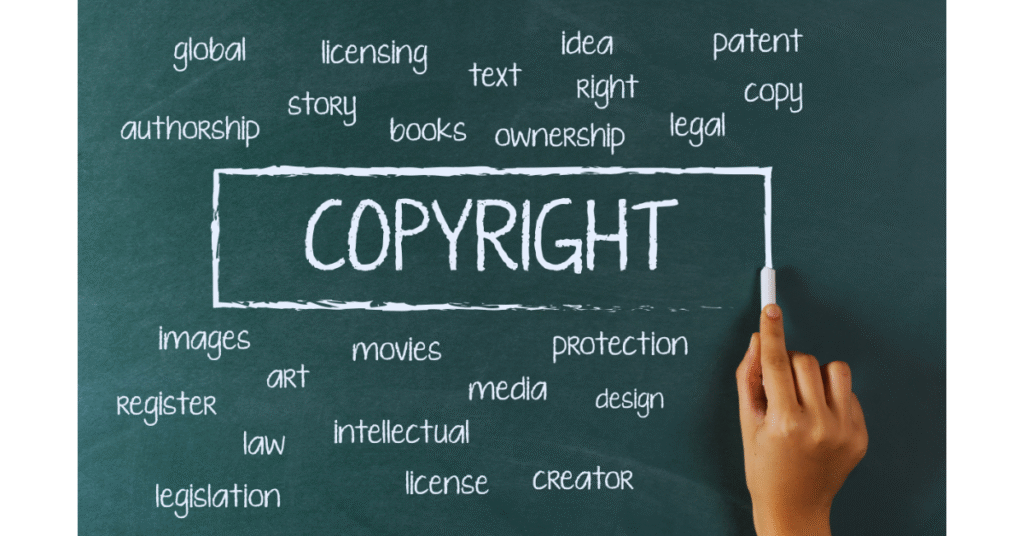
Not everything is copyrightable, but here’s what qualifies:
Literary Works
This includes books, articles, poems, and even blog posts.
Musical and Artistic Works
Songs, beats, paintings, sculptures, and photographs are all covered.
Audiovisual and Broadcast Content
Think movies, YouTube videos, TV shows, and radio broadcasts.
Software and Digital Content
Yes, even your mobile app or website design can be protected.
Who Owns Copyright in Nigeria?
Ownership can get tricky. The author is usually the creator, but the owner may be someone else—like an employer or a company.
If you’re hired to create something, your employer might own the copyright unless your contract says otherwise. In joint projects, copyright can be co-owned, which means all contributors share rights. So, it is advised that ownership of work created is specified in contracts of employment wherein the employee is created to make works that are covered under copyright. If you want copyright protection, click here to reach out to one of our lawyers.
How to Secure Copyright Protection in Nigeria
Here’s the good news: copyright protection kicks in automatically once your work is created and fixed in a tangible form. That means you don’t need to register it to have rights.
But registration with the NCC gives you extra legal muscle. It’s proof of ownership and makes enforcement easier. However, registration alone cannot cure any defect in title. For instance, if you stole someone’s work and went on to register it, the person can still successfully maintain an action against you, if he can prove that the work is originally his.
To secure your copyright, consult a lawyer who will help you with the needed paperwork for your copyright protection in Nigeria.
Duration of Copyright Protection
Copyright doesn’t last forever. Here’s the breakdown:
- Literary, musical, and artistic works: 70 years after the author’s death
- Sound recordings and broadcasts: 50 years from the date of publication.
- Anonymous works: 70 years from the date of publication
Copyright Infringement in Nigeria
Infringement happens when someone uses your work without permission. It could be copying, distributing, performing, or adapting your work.
There’s direct infringement (e.g., someone uploads your song without credit) and indirect infringement (e.g., someone sells pirated copies of your book).
In TV Xtra Production Ltd v. NUC & Zain Nigeria, the Federal High Court awarded ₦703 million in damages for copyright infringement. This shows that Nigerian courts take this seriously and is ready to exert justice when you take steps when your copyright has been infringed.
Remedies for Copyright Infringement
If someone infringes your copyright, you can:
- Sue for damages
- Get an injunction to stop further use.
- Seek criminal prosecution if it’s a serious offense.
The court can also order the destruction of infringing copies and award you legal costs.
Defences to Copyright Infringement
Not every use of your work is illegal. Some defences include:
- Fair use: For education, research, or criticism
- Public domain: If the copyright has expired.
- Consent or licensing: If you gave permission.
But these defences must be proven in court.
Copyright Protection for Online Content
In today’s digital world, your content is everywhere—Instagram, TikTok, YouTube. But guess what? It’s still protected.
You can add watermarks, use content ID systems, and report infringements to platforms. The Copyright Act 2022 also covers digital works, so your memes and reels aren’t left out.
Importance of Licensing and Assignment
Want to let someone use your work legally? You need a license. It can be:
- Exclusive: Only one person can use it
- Non-exclusive: Multiple people can use it
You can also assign your copyright permanently. Just make sure it’s in writing and signed.
Irrevocable Copyright Agreements in Nigeria
An irrevocable copyright agreement means you can’t take back the rights once granted. These are common in publishing and music deals.
To be enforceable, the agreement must be:
- In writing
- Signed by both parties
- Clearly state that it’s irrevocable.
Role of Lawyers and Legal Advice

A lawyer can help you:
- Draft copyright agreements
- Register your work.
- Sue for infringement
- Negotiate licenses and royalties.
- Take legal action against infringers.
In a country where creative work is often undervalued, having a lawyer in your corner can be the difference between being exploited and being empowered. Click here to speak to one of our lawyers.
Conclusion
Copyright protection in Nigeria isn’t just for big-name artists or tech giants—it’s for every creator who wants control over their work. Whether you’re writing a book, producing music, designing graphics, or building an app, understanding your rights is the first step to securing your legacy.
The law is on your side, but it only works if you use it. So don’t wait until someone steals your work to start caring about copyright. Take action now. Register your creations, know your rights, and protect what’s yours.
FAQs
1. Is copyright registration compulsory in Nigeria?
No, it’s not compulsory. Copyright protection begins automatically once your work is created. However, registration with the NCC strengthens your legal position and makes enforcement easier.
2. Can I copyright a song I recorded on my phone?
Yes! As long as the song is original and fixed in a tangible form (like a recording), it qualifies for copyright protection in Nigeria.
3. What happens if someone uses my work without permission?
You can take legal action for copyright infringement. Remedies include damages, injunctions, and even criminal prosecution depending on the severity.
4. How long does copyright last in Nigeria?
For literary, musical, and artistic works, copyright lasts for 70 years after the author’s death. For sound recordings and broadcasts, it’s 50 years from the date of publication.
5. Can I transfer my copyright to someone else?
Yes. You can assign your copyright or license it to others. Just make sure the agreement is in writing and clearly outlines the terms.
We don’t just write to teach you Nigerian law in a simple way, we are your best intellectual property lawyers in Nigeria. Feel free to reach our firm on, 08030881289.
Trademarks in Nigeria
